Monday, November 15, 2004

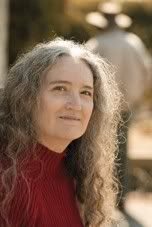
Carl Phillips--At Winter Wheat, BGSU 2004

CARL PHILLIPS is the author of Pastoral, published by Graywolf Press, and three previous books of poetry, From the Devotions (also published by Graywolf Press), Cortège, and In the Blood, which won the 1992 Samuel French Morse Poetry Prize.  He has received prizes and fellowships from the Guggenheim Foundation and the Library of Congress, and has been a finalist for both the National Book Award and the National Book Critics Circle Award. He teaches at Washington University in Saint Louis.

"Writing poetry is a very quiet, solitary sort of activity.  One writes with no expectations beyond the poem itself, and I sometimes forget that the poems are going to go out into the wider world."  --Carl Phillips in the Washington University Record, October 22, 1998.

Custom

There is a difference it used to make,
seeing three swans in this versus four in that
quadrant of sky. I am not imagining. It was very large, as its
effects were. Declarations of war, the timing fixed upon for a sea-departure; or,
about love, a sudden decision not to, to pretend instead to a kind
of choice. It was dramatic, as it should be. Without drama,
what is ritual? I look for omens everywhere, because they are everywhere
to be found. They come to me like strays, like the damaged,
something that could know better, and should, therefore—but does not:
a form of faith, you've said. I call it sacrifice—an instinct for it, or a habit at first, that
becomes required, the way art can become, eventually, all we have
of what was true. You shouldn't look at me like that. Like one of those  saints
on whom the birds once settled freely.


Regret

Painting by:  Michael G. Laster

After I posted my last entry, I settled on the couch to read this week's New Yorker and ran across an extraordinary poem that made me start thinking about REGRET.  Here is the poem by Jack Gilbert:

For eleven years I have regretted it,

regretted that I did not do what

I wanted to do as I sat there those

four hours watching her die.  I wanted

to crawl in among the machinery

and hold her in my arms, knowing

the elementary, leftover bit of her

mind would dimly recognize it was me

carrying her to where she was going.

After reading this poem, I thought about my last entry, about my enthusiasm for the Keirsey Temperament Sorter and I thought about why I am so taken with it.  It is because of my fear of regret--that I will fail to do what I am supposed to do in this life. 

Since I was a very young child, I pictured myself on my deathbed, thinking back over my life.  The thing that I didn't want to happen is this:  that I would be dying and full of regret.

The Keirsey Temperament Sorter, by showing me that my ways of perceiving the world are valid, gives me the courage to pursue many dreams and desires, including--especially-- my desire to write.  This one desire is now asserting itself in the forefront of my consciousness.  It is--more and more--how I'm choosing to define myself.  As a WRITER.

Reading the Gilbert poem also reminded me of a poem I played for my workshop participants at Winter Wheat by Muriel Rukeyser, called "Waiting For Icarus."  This poem is also about about regret.  I wanted my participants to hear it--and in Rukeyer's own voice, too--because I wanted them to think about the metaphorical meanings we can associate with gods.  Keirsey attributes a Greek god or goddess to each temperament type:  Idealist=Apollo (prophecy; seeing hidden potential); Guardian=Demeter (providing); Rational=Prometheus (giving humans fire of reason); Artisan=Dionysus (shaking off sedentary ways; call to action.)

I chose Rukeyer's poem because it is about Icarus, who was not one of the four gods or goddesses my participants might be working with, and because the poem presents Icarus from a somewhat unusual perspective.  In the poem, the speaker, a woman whose lover will not return to her, regrets her lack of opportunity, her lack of action:


Waiting for Icarus by Muriel Rukeyser (1913-1980)

He said he would be back and we'd drink wine together
He said that everything would be better than before
He said we were on the edge of a new relation
He said he would never again cringe before his father
He said that he was going to invent full-time
He said he loved me that going into me
He said was going into the world and the sky
He said all the buckles were very firm

He said the wax was the best wax
He said Wait for me here on the beach
He said Just don't cry

I remember the gulls and the waves
I remember the islands going dark on the sea
I remember the girls laughing
I remember they said he only wanted to get away from me
I remember mother saying : Inventors are like poets, a trashy lot
I remember she told me those who try out inventions are worse
I remember she added : Women who love such are the worst of all
I have been waiting all day, or perhaps longer.
I would have liked to try those wings myself.
It would have been better than this.

This poem of regret is similar to the first poem.  In both cases, the speaker regrets inaction.  In both cases, this inaction possibly results from societal expectations (i.e., "Don't make a scene" or "Women can't do that.")

Rukeyer's final lines never fail to ring in my ears:  "I would have liked to  try those wings myself/It would have been better than this."

My point is that the Keirsey Temperament Sorter gave me the courage to try the wings on, to attemt the improbable success--to write a novel; to write stories someone would want to publish and others would want to read.

I wasn't born with confidence--far from it.  Confidence wasn't fostered in me at home, either.  I had to find courage in other ways.  The courage to try on the wings.  Keirsey's book Please Understand Me II  helped to give me this courage.

*Whereas my childhood guardians had often told me that I daydreamed too much, Keirsey pointed out that my primary mode of living is internal. 

*Whereas I was told I was too sensitive, Keirsey said that I deal with things according to how I feel about them or how they fit into my personal value system. 

*Whereas I was told that I worried too much about things I couldn't change, Keirsey showed me that my primary goal is to find out my meaning in life, my purpose, how I can best serve humanity, how I can make the world a better place. 

"That's stupid," I hear in my mind, "That's not realistic," "That's a waste of time," "That's laziness--do some real work for a change," taunt the voices from the past.  Yet Keirsey has shown me a different way to view myself.  My goals are valid.  Natural for me.  I am okay.  Keirsey's book has helped me along the path to individuation.

I realized after reading the Gilbert poem in the New Yorker that what my last entry lacked was my personal story.  This book was not just a book about theory to me--it was part of my salvation.

Winter Wheat

This weekend I participated in Bowling Green State University's Winter Wheat Festival of Writing.  I'm not sure who came up with the name for our festival, but I would guess "Wheat" was chosen because the grain is the main ingredient in bread, which is the staff of life.  I believe it was Barry Lopez who pointed out that some people need a story more than food.  Thus our festival gives us a way to share our experiences in the making of stories and poems, and the festival itself becomes a kind of food for the spirit of the writer. 

This year the festival focused on "identity."  Accordingly, I gave a presentation on temperament.  I based my presentation on two websites, the David Keirsey site and the Personality Page site, as well as the book Please Understand Me II, by David Keirsey. 

I became familiar with temperament theory about five years ago when a colleague at BGSU gave me a copy of Please Understand Me II.  Initially, I was skeptical about the theory that Keirsey proposed, because I prefer to look at life as a vast mystery.  I didn't like the thought that people could be categorized into "types."  But after taking the temperament sorter and reading about my "type," I became intrigued.  Later, I began to regret I had not known about temperament theory much earlier in my life.  Keirsey's books have been around since the 1970s and are based on his dissertation research into the theories of Plato, Aristotle, Jung, Briggs, and Myers.  As I studied temperament theory, I came to accept that people are not born as blank slates, that we are each born to experience the world in a certain way, the way that feels best, most familiar to us.  Yes, our life experiences also determine our personality, but life experiences do not tell the whole tale.  For instance, no matter how much a parent might want a child to play the piano or play little league baseball, that child might not be suited to that activity temperamentally.  No amount of experience, practice, pushing, or cajoling isgoing to change the fact that the child would rather make things from clay or write stories.  

During my presentation, I gave a quick overview of temperament theory, led the participants through the sorter so that they determined their own temperament type, and then allowed the participants to write and reflect on what their temperament meant in terms of their writing.  The last activity we did was to consider what each type means metaphorically.  To do this, we looked at how Keirsey matches each type to a Greek god or goddess.  I asked the participants to write about how their god or goddess embodies their life preferences.  One participant, a rational whose god is therefore Prometheus, shared with the other participants that she had the night before chosen the poem she was to read at the festival that night.  She told us that it is a poem about fire.  (Of course, Prometheus stole fire from the gods and gave it to humans.) 

Temperament theory today suggests that all of us have a "primary mode" of operation within four categories of our lives:  our flow of energy, how we take in information, how we prefer to make decisions, and the basic day-to-day lifestyle we prefer.  Within each of these categories we prefer to be either:  1.  Extraverted or Introverted; 2.  Sensing or Intuitive; 3.  Thinking or Feeling; 4.  Judging or Perceiving.  The theory holds that we naturally use one mode of operation within each eategory more easily and frequently than the other mode.  The theorists are careful to point out that we "prefer" one function over the other, although we all function within each mode.  The combination of the four "preferences" defines our temperament type.

I wanted participants to understand that temperament theory is not about putting people into boxes.  As the personality page online suggests:  "Learning about our ...type helps us to understand why certain areas in life come easily to us, and others are more of a struggle.  Learning about other people's ...types help us to understand the most effective way to communicate with them, and how they function best."

Temperament theory has become invaluable to me in working with other writers. It has also helped me in my own writing, particularly in character development.  It  helps me to get inside my characters' heads and to understand their motivations.

Many find temperament theory useful in their own personal growth.  Knowing your type helps you to clarify and to understand what is important to you.  It helps you to recognize your weaknesses without hiding behind them.  It helps you to strive for balance.  Most importantly, temperament theory helps open the door to our success, however we define it.  Theorists are quick to point out that there is no magic formula or scheme that will make us successful people.  But knowing your temperament type is a powerful aid in our quest for excellence.  It will help us to expand our understanding of human nature.  It will help us to reach what Jung called "individuation."

Individuation, according to Jung, is the conscious realization of your true self, beyond the ego that is presented by your conscious self.

There are sixteen types.  These sixteen types exist within four broad categories:  Idealists, Artisans, Guardians, and Rationals.

Many of the participants in my workshop felt as though the scales had fallen from their eyes and had a new understanding of what "makes them tick" as individuals and as writers.  Many were quick to perceive how the description of each type could aid them in character development.  And those who were teachers said they felt more aware about how their students process information.  Many also said they understood more about why each of us choose to write.  And why each of us enjoy reading certain types of literature more than others.

Participating in the Winter Wheat Festival was an excellent experience.  After leading my workshop, I participated in two other workshops and then listened to the poet Carl Phillips read from his work.  It's wonderful to be around other writers for day, to be with others who recognize the importance of the writing life.
Friday, November 12, 2004

Cosmic Egg

November is always a difficult month.  I teach college English and in November there is a flurry of grading and student meetings; this November has been particularly difficult because of the divisiveness of the election. During busy and difficult times, I have to find stories that will reestablish within me a feeling of unity; otherwise, I can't create.  I can't even THINK about creating.  I can't create out of a divided self.

It's very important for me to read myths.  As J. F. Bierlein says in his book Parallel Myths, which I use in my Imaginative Writing class at the university:  "Myth is a unique use of language that describes the realities beyond our five senses.  It fills the gap between the images of the unconscious and the language of conscious logic."

The following myth is one of my favorites.  I especially enjoy portrayal of the pre-patriarchial goddess-creator.  In this myth, the goddess keeps her power, unlike the Babylonian creation myth wherein Marduk finishes the work of creation by slaying Tiamet, his mother. 

Eurynome And Ophion  

In the beginning was Chaos and darkness.  Chaos was a great vast sea in which all elements were mixed together without form.    Out of this sea rose Eurynome, the Great Goddess of all things. 

She emerged from the waves naked and began to dance on the sea, as there was nothing firm for her to stand on.  Suddenly, the south wind blew and spun her around.  

It is said that the north wind has miraculous fertility powers and, when she spun around, Eurynome grasped at the north wind.  The great serpent of the waters, Ophion, saw Eurynome dancing and was filled with desire.   

He made love to her immediately.  She then assumed the form of a lovely bird and gave birth to the great universal egg.  Ophion coiled his tail around this egg until it cracked, spilling out creatures all over the newly formed earth.  Eurynome loved Ophion for a time and they went to live on Mount Olympus, home of the gods.  

However, Ophion became obnoxious and tiresome, bragging how he had fathered all living things.  Eurynome grew weary of him and bruised his head with her heel.  He was then cast down to the dark regions of the earth.  

Thursday, November 11, 2004

It Should Have Been Different

This entry is about darkness and how stories can show us a way out--

The night is darkening round me,

The wild winds coldly blow;

But a tyrant spell has bound me

And I cannot, cannot go.  --Emily Bronte

For those wishing things could have turned out differently:

"as the ancient Chinese proverb says:  To dream of happiness is in itself a grief.  We are isolated and fearful.  ...our sorrow ... demands our attention, for even though the acute phases of grief are ... behind us, we still need to come to grips with the final remnants of our longing. ...

"We hear the final whispers of our protest that the way of the universe should have been different. 

"When our days and nights reflect such witheld mourning, it may be helpful to listen to the story of Coyote in the Land of the Dead."  --Alida Gersie

Coyote and Eagle-man set out on a journey to bring back the people, so they might be renewed.  At last they came to a grey, sombre land, where the sun was rarely seen.  When darkness was about to fall they reached the wide river which flows between the land of the living and the land of the dead.

Coyote and Eagle-man lifted their voices, calling into the darkening night that someone might send a boat to fetch them,.  Nothing stirred and no one came. 

Then Coyote thought.  His thought travelled deep inside himself, and he lifted to his throat an ancient song, unknown to him, and as he sang this song of power, a canoe set forth from the faraway shore, and made its way towards them. ...

I don't know where Coyote's song of power comes from.  I only know I have experienced the feeling evoked in this tale.  I have felt a thought, a longing, travelling inside myself, and I've felt myself rising to the power of an old, old song.  It is indeed a resurrection from the land of the dead.

Thursday, November 4, 2004

Like Every Other Day

Today, like every other day

Today, like every other day, we wake up empty
and frightened. Don’t open the door to the study
and begin reading. Take down the dulcimer.

Let the beauty we love be what we do.
There are hundreds of ways to kneel and kiss the ground.

--Rumi

Monday, November 1, 2004

Underworld Seed

Photograph of a seed, by Maneesh Agrawala and Apostolos Lerios

Next week promises to be the first full week of cool temperatures here in Northwest Ohio.  I'm happy to see and feel the onset of winter. 

When I lived in Eastern North Carolina I didn't experience winter the way I do here--weeks of relentless cold, forcing you to slow down and to be quiet.  I find winter to be an excellent time for thinking up stories.  I love the gray days and the long, dark nights.  It's a time of storing and gathering energy.  I don't always write a lot in the winter, because I'm teaching.  But I do a lot of mental writing, mental sorting, planning for future projects.  I do a lot of jotting in my notebooks.  I do a lot of reading in preparation for when I will have time to write.

Living in Northern Ohio, close to the Great Lakes where the winters are long and cold, I have new appreciation for the myths that address the change of seasons, like the story of Demeter and Persephone.  I've been revisiting that myth over the weekend. 

Like Bridget, Demeter existed before the patriarchal religions were established.  Demeter has her origins as an Earth Goddess. She represented the fruit of life (grain).  Persephone came to represent the seed of life (corn). 

On the surface, this is a story about the origin of winter.  David Leeming and Jake Page write in Goddess that:  "During the seasons when Persephone abided with Demeter, the earth would bloom and be fragrant; when she dwelled in the underworld, Demeter would ... become the crone and don her weeds of mourning, and the earth would grow cold and grieve with her."

However, I am most interested in how mythology and psychology intersect.  So therefore the interpretation that I like best is that Persephone's journey to the underworld is a metaphor for our assimilation of the fruits of the dark unconscious.  (According to Jung, the dark unconscious is where we relegate that which we do not want to face.)  

David Leeming and Jake Page write in Goddess of how this myth can be interpreted as a person's movement beyond "paradise" and "innocence" into the adult world.  

David Leeming is Professor Emeritus of English and Comparative Literature at the University of Connecticut.  Jake Page is a science writer, essayist, and novelist.